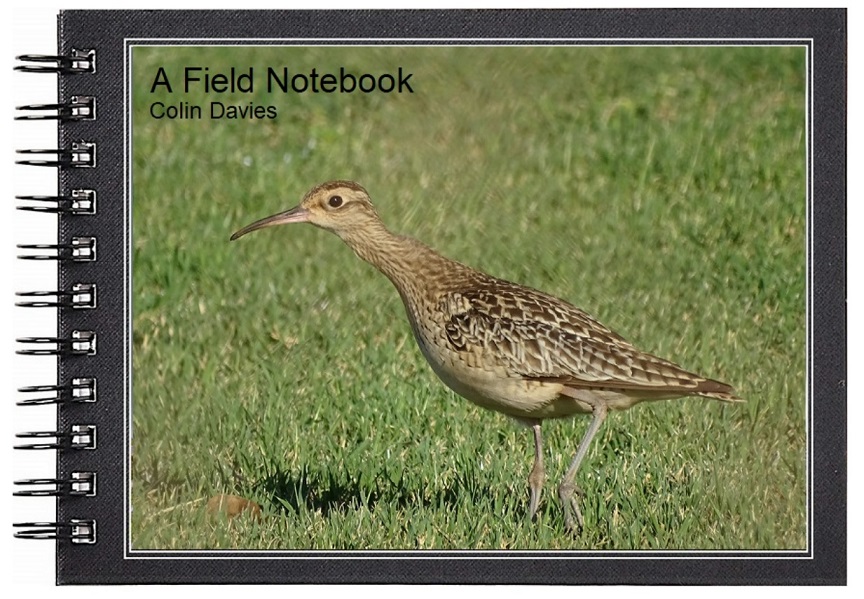
During the coronavirus lockdown in April and early May 2020, a pair of little
ringed plover took up residence on the yacht club foreshore, in an area which
looked likely to provide very suitable breeding habitat. The male was seen
displaying and eventually the pair were seen copulating.
Little ringed plover are listed in
schedule 1 of the Wildlife and Countryside Act (1981), and as such it is an offence to intentionally or recklessly disturb them
at, on or near an ‘active’ nest. With this in mind I am deliberately not
saying exactly where these birds nested and though regular readers of this
blog will have a pretty good idea, the chances of the birds returning to breed
next year in the same location is negligible with no coronavirus lockdown in
place.
It was clear that the birds were taking advantage of lockdown to breed in an
area where they would otherwise not be able to breed due to high levels of
disturbance. As long as lockdown persisted they could probably nest
successfully in the area, but by the beginning of May restrictions looked
likely to be lifted slightly and I was concerned that a resumption of yachting
and swimming might lead to a level of disturbance which the birds would not be
able to tolerate and would lead to either the accidental destruction or
abandonment of the nest. Little ringed plovers like to nest in stony areas
adjacent to water with very little vegetation yet despite this the nests can
be very difficult to see even at close range. Nests can be crushed by people
or vehicles who don't even know that they are there.
I felt that the least I could do would be to make the yacht club aware of the
situation and see if they could restrict access to the area around the nest
and ask members to keep dogs on a lead. As I result of this I emailed the
commodore of the club who proved to be very understanding and keen to help.
Fencing was erected around the nest using just pins and barrier tape and
signage put up to inform people about what was happening. By the beginning of
June yachting and open water swimming had begun again in earnest and by the
end of the month sometimes up to 100 people or more were present on or around
the foreshore or in the water, and on other days yachts and trailers were
parked up everywhere. Open water swimming then continued daily until the end
of the period with at times up to 60 people in the water and at least as many
either waiting to enter or watching, and over 80 cars on the yacht club car
park. Yet despite very high levels of disturbance all around the fenced area
the pair miraculously managed to hatch 4 chicks. As is usual with the species
the chicks were running around in the immediate vicinity of the nest within
hours of hatching, and by the following day they were venturing further
afield, often outside the fenced area along the whole length of the foreshore
and most people were oblivious to them.
In fact this lack of visibility was one of the biggest problems which I
encountered and one which I didn't anticipate. Despite the fact that there
were signs up saying that birds were nesting within the fenced area most
people I spoke to seemed to think that they weren't there because it just
looked like a pile of stones with no vegetation where it would be impossible
to not see a bird sitting on its nest. Yet the nest was there and the birds
were sitting. Then when the chicks hatched, they were also virtually invisible
at first, being little more than the size of the stones and the same colour,
and when they crouched down they just disappeared.
After the first week only one chick remained, with the other three chicks
possibly picked off one by one by a kestrel. Around this time the family's
behaviour changed and especially in busy periods they started spending a lot
of time in the area where the yachts were parked.
Twenty-four days after hatching the last remaining chick took it's first
flight. By this time the female had abandoned her parental responsibilities
and was nowhere to be seen. The juvenile remained on the foreshore with the
male for a few more days, even occasionally still being brooded, until it
was last seen on day 29 after hatching.
This is my diary of the events. For most of the period I did not have access
to the yacht club and all of my viewing was done from a vantage point
outside the perimeter fence at a distance of approximately 115m. The
majority of photographs and the videos in this post were taken from this
position, especially those at the start. I actually found this a better
place to view from, rather than inside the yacht club because it was
slightly raised up and the birds behaved more naturally.
On only a handful of occasions up until about the middle of June did I enter
the grounds, usually if I thought somebody was getting too close to the nest
and keeping the adults off the eggs or there was a dog nearby off the lead.
When the chicks were about a week old I was given access to the club which
enabled me to observe the family when they started using the yacht parking
area and from about the third week in June I did start to enter the club
more regularly and was able to sit and watch the birds at a distance of
about 50m.
This diary is about the birds, their behaviour and their remarkable
resilience, it is not about people. I have nothing but praise for the
efforts of the yacht club and the organisers of the open water swim, and
when I mention disturbance, it is not intended as a criticism of the
individuals, rather I am trying to show how resilient to disturbance the
birds were.