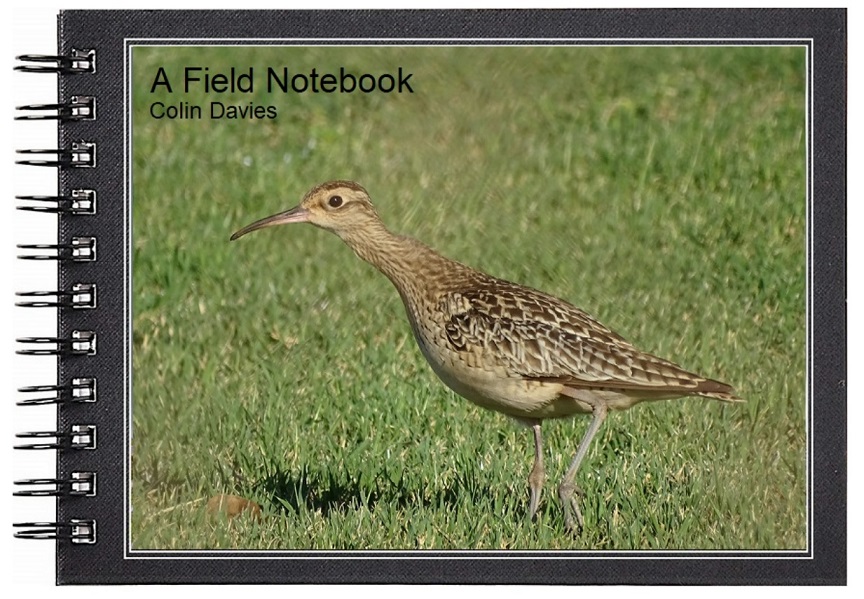
Sunday, 25 June 2017

Drumnakilly Bog, Northern Ireland


Sphagnum megallanicum easily identifiable partly due to the colour and also due to the leaf shape.


Sunday, 18 June 2017

The Magnificent Great Orme


The Great Orme at Llandudno is one of my top 10 favourite places in the world, and June is one of the best months to visit. Not only does it have breathtaking views comparible with anywhere you might like to mention, it also has an array of flora and fauna to keep the naturalist happy for days on end.

Today we parked at the West Shore and walked clockwise around the Orme, taking the track up and over the limestone pavement from Llys Helig to the Rest & Be Thankful cafe, and then following marine drive back to Llandudno.

Almost immediately it was obvious that there had been a mass emergance of the butterfly silver-studded blue. They were everywhere, hundreds of them, on the roadside verges, in the gardens, even landing in hedges or on the road itself.  To see them at their best though you need to get onto the limestome grasslands where the perfect photo opportunity is to get them feeding on common rockrose, a limestome loving plant that flowers on the Orme in profusion at this time of the year. I've never seen silver-studded blue in such numbers anywhere before, and it was worth the walk just to experience this spectacle.


Male silver-studded blues on common rockrose.


A female silver-studded blue.

These grassy hillsides on the west side of the Orme are the best places to see silver-studded blue in my experience.

The views of the Conwy estuary ain't half bad from here either!


A little higher up we came across lots of the day flying moth, Cistus forester. This is quite a scarce species in the UK, and is usually found where it's favourite food plant common rockrose grows. Although there is plenty of common rockrose at lower levels, in my experience this moth is best seen on the Orme on the grasslands either side of the limestone pavement.

Common rockrose Helianthemum nummularium.


Superficially similar, but this is a much rarer plant. Hoary rockrose Helianthemum oelandicum is a speciality of the rocky Welsh coastline wherever there is limestone, but it is seen at its best on the Great Orme.


Hoary rockrose.


Hoary rockrose.

Another rarity of the  Great Orme limestone grasslands is Spiked speedwell Veronica spicatta.

The Rest & Be Thankful cafe is a good place to stop and refuel for a while, before continuing the journey down Marine drive and back to Llandudno. I like walking back down Marine Drive because offers a whole array of different plants growing on the limestone cliffs.


One of the most striking and beautiful of plants in June is bloody cranesbill Geranium sanguineum, a real limestone specialist which is common along Marine Drive.


Red valerian Centranthus ruber is an even commoner plant of the limestone cliffs.

Grayling butterfly on Red valerian.

The views on this side of the Orme aren't too bad either. The main seabird colonies are on this side of the Great Orme, and include many hundreds of guillemots, razorbills, kittiwakes, cormorants and fulmers. A more recent arrival is the chough, which now breeds on the Orme and today we saw about 10 during our walk along Marine Drive.


As you walk along Marine drive you can sometimes come across seepages in the limestone such as this. The solubility of limestone in naturally acidic rainwater over millions of years results in the caves, pot holes, underground rivers and grikes often found in limestone regions. Where water runs down or through limestone, organic acid from the soil above increases this action and in caves can form stalactites and stalagmites.  The rock in this photos looks like it is melting, and you can see what looks like a mini stalactite forming. The rock here is soft, almost like mud to touch, and virtually no plants can tolerate living in such a calcareous position, not even bryophytes. Yet if you look over to the left of the photo and you can see that there is a small plant growing and that it is almost covered in the limestone solution! How can this plant survive here when others cannot?

The answer is that it is a butterwort Pinguicula vulgaris, an insectiverous plant which derives most of its nutrients from small insects which stick to its leaves and are then digested. In an environment such as this the plants roots are pretty much used just to anchor it down.


The Orme always offers something unexpected, and today it was this pyramidal orchid Anacamptis pyramidalis growing next to the road on Marine Drive. I don't think I've ever seen this orchid on the Orme before.


Friday, 16 June 2017

Grass snake

I came across this grass snake whilst checking felts during a reptile survey in Buckinghamshire. This is only one of a handful of encounters I have ever had with the species.

Monday, 12 June 2017

Elegant Tern, Church Norton, Pagham Harbour


Britains first confirmed Elegant tern was found at Hayling Island in Hampshire on Friday. Orange billed terns such as this can be difficult to identify, and just to confuse matters further, they do have an unfortunate habit of hybridising. However this particular individual has previously been in France where it was ringed, and DNA samples taken at the time have proved that this bird is a pure elegant tern, making it an opportunity too good to miss.

For the first day or so it  was very hit and miss, and it didn't inspire me to go, being seen at two or three different places in the Hayling Island area and never staying anywhere for very long. However by Saturday afternoon it had been pinned down and was apparently spending a lot of time at a small tern colony at Church Norton on Pagham Harbour, a place I know quite well, because a couple of years ago a Hudsonian whimbrel was frequenting exactly the same spot.

I decided to call in today "on my way to work", and I arrived at Church Norton at about 7am. I'd woken up at 1am unable to sleep and decided to give it a go. At least the traffic would be quieter if I travelled at that time of day I reasoned.  The bird had been seen flying out to sea at about 5:30, presumably to fish, and had not returned when I arrived. However after an anxious wait, it reappeared at about 8:15 but immediately disappeared into the middle of the tern colony where it was completely obscured by long grass and plants.

Over the next 90 minutes or so it showed only very occasionally, usually just flying up for a second and then dropping down again and always landing completely out of view. You had to be looking permanently through the scope at the spot where it had landed to have any chance of seeing it when it flew, it was that brief.


Eventually though, somebody picked it up on the deck in amongst the colony where it could be seen displaying to the Sandwich terns. Nice to see it display of course, but even now it was only a distant and partially obscured head view.

I was running short of time, needing to be at a job just north of London in the afternoon. I'd expected it to show much better than this, but I consoled myself with the thought "at least I've seen it", a line which us birders often roll out to hide our diappointment.  Still, it was only 10:00 and I had nowehere else to go, so  I decided to hang on as long as I could, just in case it decided to perform a little better. Thank goodness I did.


Finally at about 10:30 it flew up and around the island and then landed on a sand bank with Sandwich terns at about half the distance it had been. What a view it was now! Funny how these days we seem to define a good view by the quality of photographs we can get, but honestly it was a cracking view, whatever the photos here may tell you. A good old fashioned, pre-digital great view!

Through the scope I could clearly see its crest and the bling on its leg. It walked into the water an splashed around for a bit and then walked higher up the bank for a preen. After about 10 minutes it flew up and landed back in the colony and was lost to sight again. My cue to go! A local who birds this site everyday said it was the best view he had had of the bird, so I figured that it was unlikely to show much better than that in the short time I had left.

I love these orange-billed terns. It reminded me very much of the royal tern I saw at Llandudno in 2009, albeit in less exciting circumstances.


I counted at least 101 Mediterranean gulls on the island, which was a record for me!

Monday, 5 June 2017

Red Kite, Pennington Flash


This afternoon at Pennington Flash at 2:15pm, a red kite was over the golf course and drifted over Horrock's hide for a minute. Trouble is I was on the south side of the flash which combined with the extremly dull and wet weather helps explain the very poor photos. It drifted away again over the golf course, but surely won't have gone far in this weather.

Also today, three Cetti's warblers including one seen well at Sorrowcow pond and a single common tern.


Friday, 2 June 2017

A quick visit to Donegal


Today I had a flying visit to County Donegal, one of the few Irish counties I had never been to before. On the evidence of today it's a very beautiful part of the country which deserves a much longer visit. I made my way to Dunfanaghy on the north coast because that is one of the last remaining strongholds of corncrake on mainland Ireland.


Although there are corncrakes here, it doesn't look anywhere near as good as many places in the Outer Hebrides, just a handful of fields. However, following a meal and some Irish folk music in a bar in the town, I headed for this field and heard a corncrake  at quite close range, but it was a real pain to see. 


Nearby Horn head is a spectacular a piece of coastline as  any I've seen in Ireland. There are choughs here and a reasonable size seabird colony,


Popular Posts