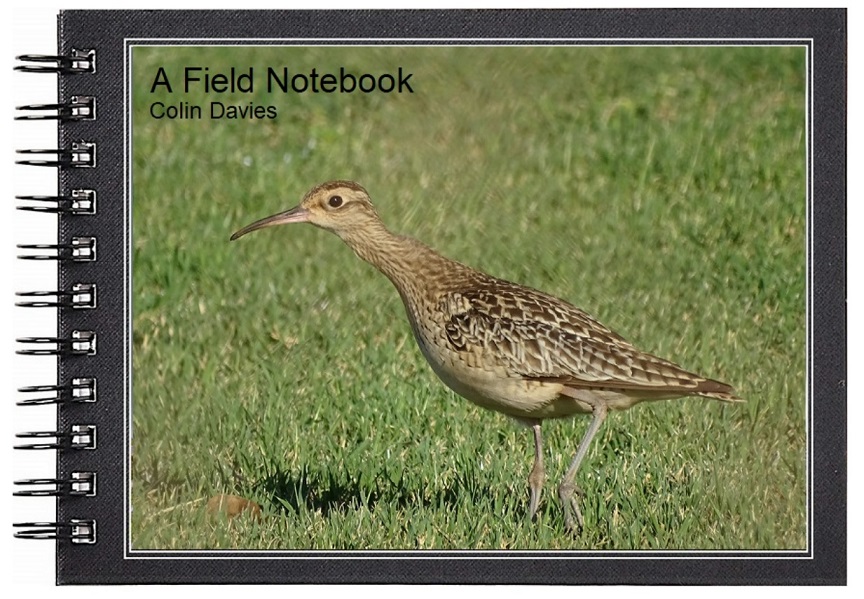
I called in at Whixall Moss in Shropshire today where there has been a water pipit on the flood near Morris Bridge. Amazingly I found the bird immediately and it showed pretty well through the scope, one of the best water pipits I have ever seen in fact. Lots of teal, shoveler and wigeon also on the flood, and a raven flew over.
Tuesday, 15 March 2016
Sunday, 13 March 2016
Leighton Moss
Bearded tits and marsh harrier from the causeway at Leighton Moss today, also several green woodpeckers calling at various places along our walk, especially around Leighton Hall and Jack Scout. A beautiful day to be out and about.
Year: 165 (Bearded tit); This time 2015 (153); 2014 (164)
The Causeway Hide as it's now known.
Frogs spawning.
Old Man's Beard Clematis vitalba
Year: 165 (Bearded tit); This time 2015 (153); 2014 (164)
The Causeway Hide as it's now known.
Frogs spawning.
Old Man's Beard Clematis vitalba
Saturday, 12 March 2016
From Offa's Dyke at World's End to the Old Baths
After several failed attempts over the past few years, this morning I finally caught up with the great grey shrike at World's End, Llangollen, seen in the clearfell area adjacent to the Offa's Dyke footpath.
You can see the Offa's Dyke footpath to the right and above the shrike, winding its way back to the car. While we were watching the shrike a male and two female black grouse flew over, and we saw several red grouse.
However, we spent most of the day on the Wirral. It was a 9.90m high tide, but there was no wind at all to drive it in, so it didn't come close to the sea wall at the Old Bath's, Parkgate. Still plenty of good birds to see though, and in fact we had better views than usual of at least one short-eared owl, a ringtail hen harrier and a juvenile merlin and distant views of two great white egrets. At least 50 little egrets at Parkgate.
After a brief stop at Burton Mere Wetlands, where there were at least 32 avocets, we moved on to Burton Marsh at Denhall Hall Lane where we saw another four short-eared owls, ringtail hen harrier and a merlin. Another 30 or so little egrets on Burton Marsh.
Year: 164 (Great grey shrike, avocet)
Short-eared owl at Decca Pools, Denhall Lane
...at Parkgate
...and dive bombing prey!
Ringtail hen harrier at Parkgate.
I'm thinking that this is a moulting juvenile male rather than a female given the the ground colour of the underparts and both the upperwing and underwing patterns (only light barring on the underwing primaries especially). Also the wings look quite slim for a female.
Engrailed moth on the lights at Burton Mere Wetlands.
You can see the Offa's Dyke footpath to the right and above the shrike, winding its way back to the car. While we were watching the shrike a male and two female black grouse flew over, and we saw several red grouse.
However, we spent most of the day on the Wirral. It was a 9.90m high tide, but there was no wind at all to drive it in, so it didn't come close to the sea wall at the Old Bath's, Parkgate. Still plenty of good birds to see though, and in fact we had better views than usual of at least one short-eared owl, a ringtail hen harrier and a juvenile merlin and distant views of two great white egrets. At least 50 little egrets at Parkgate.
After a brief stop at Burton Mere Wetlands, where there were at least 32 avocets, we moved on to Burton Marsh at Denhall Hall Lane where we saw another four short-eared owls, ringtail hen harrier and a merlin. Another 30 or so little egrets on Burton Marsh.
Year: 164 (Great grey shrike, avocet)
Short-eared owl at Decca Pools, Denhall Lane
...at Parkgate
...and dive bombing prey!
Ringtail hen harrier at Parkgate.
I'm thinking that this is a moulting juvenile male rather than a female given the the ground colour of the underparts and both the upperwing and underwing patterns (only light barring on the underwing primaries especially). Also the wings look quite slim for a female.
Engrailed moth on the lights at Burton Mere Wetlands.
Sunday, 6 March 2016
Houghton Green Flash, Winwick
Water levels are up at Houghton Green Flash at the moment, due to the heavy rain we have had over the winter. It's still a shadow of its former self, but at least it's possible to go with some hope of seeing something and today I even managed a year tick in the shape of six grey partridge! Not much variety on the water, but 40 wigeon were nice and about 20 mallard. I also flushed a couple of snipe and a buzzard flew over. Would it be naive to hope that the water levels might start to recover now? Probably.
Year: 163 (Grey Partridge)
You can see where the shoreline was last year, roughly at the point where the vegetation ends. I'm not actually sure whether this is an improvement or not, at least last year there was some mud for waders, but at the moment the water goes into the tall vegetation leaving virtually no shoreline for birds like redshank or little ringed plover etc. Still I'd rather see the water levels go up and the site recover over time, but we'll have to wait and see.
Year: 163 (Grey Partridge)
You can see where the shoreline was last year, roughly at the point where the vegetation ends. I'm not actually sure whether this is an improvement or not, at least last year there was some mud for waders, but at the moment the water goes into the tall vegetation leaving virtually no shoreline for birds like redshank or little ringed plover etc. Still I'd rather see the water levels go up and the site recover over time, but we'll have to wait and see.
Saturday, 5 March 2016
Rutland Water and Pugney's
We spent the morning and early afternoon at Rutland Water where there has been an impressive variety of avian species over the past couple of weeks. First off we headed to the Shoveler hide to look for a juvenile long-billed dowitcher which had been present for about 10 days. The bird duly obliged and showed as well as any I have seen. It was my tenth but the first for seven years. While we were in the hide we got another couple of year ticks in the form of red kite and Egyptian goose. On the way back to the visitor center we called in at the Sandpiper hide and saw three smew, a drake and two redheads.
In the North Arm of Rutland Water, from Fisherman's car park, the red-necked grebe which I saw last December was still present and now showing real signs of summer plumage, with a partially red neck and bright yellow on the bill. Then moving a mile further north, but still in the North Arm, we managed to locate the party of three summer plumage black-necked grebes associating with a single winter plumage Slavonian grebe. Fortunately we also managed to find both common grebe species, little and great crested, meaning that we had seen all five British species of grebe on the same day at the same location. That's definitely a first for me!
It was still only 13:30 and we had seen just about everything that we were likely to see at Rutland Water, 61 species I recorded but with birds such as wren, reed bunting, song thrush, pied wagtail, collared dove and greenfinch missing from the list, I'm sure that if we had stayed all day and made the effort we could easliy have reached 75 - 80 species in the day just at Rutland Water. An impressive total by any standards.
However at this point we decided to make for Pugney's Country Park in West Yorkshire, where there had been a 1st winter ferruginous duck on the lake behind the Swan and Cygnet pub. When we arrived the bird had just disappeared into the reedbed, as ferruginous ducks are prone to do, but it soon reappeared and we had excellent views of the bird in the afternoon sunlight. A really smart duck, my first for 12 years and for me probably the bird of the day.
Year: 162 (Long-billed dowitcher, ferruginous duck, red-necked grebe, Slavonian grebe, Egyptian goose, red kite). This time last year I was on 146, this time 2014 I was on 161.
First winter female ferruginous duck. Notice the distinctive head shape, longish bill and bill pattern. I must admit, I didn't realise until this evening that female and male ferruginous ducks have different bill patterns. When I was watching the bird in the field I was a bit worried about the bill pattern on this bird because it wasn't as I expected. However on reviewing the photographs the bill pattern does seem to be consistent with a female.
Another slight concern is what appears to be grey on the birds back in some photographs. I don't remember this being evident in the field, but if it was really present it would probably indicate a pochard influence in the birds genes. However in other photographs this is not obvious, and it's probably due to the harsh late afternoon winter sunlight combined with the reflection off the water. This has been a well watched bird and I assume that those who have seen it better than I have ruled out a hybrid.
On this photo there is no appearance of grey on the back and the bill is perfect. In fact everything looks fine.
Here are another five images of the bird which show how misleading it can be to rely on photographs when assessing the id of a bird. In these photos the head shape looks perfect, the bill is perfect and there is no sign of any grey on the back. A smart bird!
Long-billed dowitcher.
Egyptian geese.
Rutland Water.
In the North Arm of Rutland Water, from Fisherman's car park, the red-necked grebe which I saw last December was still present and now showing real signs of summer plumage, with a partially red neck and bright yellow on the bill. Then moving a mile further north, but still in the North Arm, we managed to locate the party of three summer plumage black-necked grebes associating with a single winter plumage Slavonian grebe. Fortunately we also managed to find both common grebe species, little and great crested, meaning that we had seen all five British species of grebe on the same day at the same location. That's definitely a first for me!
It was still only 13:30 and we had seen just about everything that we were likely to see at Rutland Water, 61 species I recorded but with birds such as wren, reed bunting, song thrush, pied wagtail, collared dove and greenfinch missing from the list, I'm sure that if we had stayed all day and made the effort we could easliy have reached 75 - 80 species in the day just at Rutland Water. An impressive total by any standards.
However at this point we decided to make for Pugney's Country Park in West Yorkshire, where there had been a 1st winter ferruginous duck on the lake behind the Swan and Cygnet pub. When we arrived the bird had just disappeared into the reedbed, as ferruginous ducks are prone to do, but it soon reappeared and we had excellent views of the bird in the afternoon sunlight. A really smart duck, my first for 12 years and for me probably the bird of the day.
Year: 162 (Long-billed dowitcher, ferruginous duck, red-necked grebe, Slavonian grebe, Egyptian goose, red kite). This time last year I was on 146, this time 2014 I was on 161.
First winter female ferruginous duck. Notice the distinctive head shape, longish bill and bill pattern. I must admit, I didn't realise until this evening that female and male ferruginous ducks have different bill patterns. When I was watching the bird in the field I was a bit worried about the bill pattern on this bird because it wasn't as I expected. However on reviewing the photographs the bill pattern does seem to be consistent with a female.
Another slight concern is what appears to be grey on the birds back in some photographs. I don't remember this being evident in the field, but if it was really present it would probably indicate a pochard influence in the birds genes. However in other photographs this is not obvious, and it's probably due to the harsh late afternoon winter sunlight combined with the reflection off the water. This has been a well watched bird and I assume that those who have seen it better than I have ruled out a hybrid.
On this photo there is no appearance of grey on the back and the bill is perfect. In fact everything looks fine.
Here are another five images of the bird which show how misleading it can be to rely on photographs when assessing the id of a bird. In these photos the head shape looks perfect, the bill is perfect and there is no sign of any grey on the back. A smart bird!
Long-billed dowitcher.
Egyptian geese.
Rutland Water.
Thursday, 3 March 2016
Shorelark and Snow Bunting, Cleethorpes Beach
There was a cracking shorelark on the beach at Cleethorpes today, about 200m west of Buck Beck car park. Back in 1988 I saw a pair, including a singing male on near the summit of a Greek mountain. Todays bird was nearly the match of that, bright yellow in the sunlight and with a nice pair of horns as well. Also on the beach, a single snow bunting.
Year: 156 (Shorelark)
There's been a shorelark reported from Cleethorpes beach on and off since around Christmas, but it's been very difficult to catch up, possibly ranging as far as Tetney Marshes to the south and perhaps even Spurn on the otherside of the Humber. Speaking to a local today he wasn't convinced that this bird was the same as that reported earlier in the year, but whatever the truth, it's a cracker.
Year: 156 (Shorelark)
There's been a shorelark reported from Cleethorpes beach on and off since around Christmas, but it's been very difficult to catch up, possibly ranging as far as Tetney Marshes to the south and perhaps even Spurn on the otherside of the Humber. Speaking to a local today he wasn't convinced that this bird was the same as that reported earlier in the year, but whatever the truth, it's a cracker.
Sunday, 28 February 2016
A few conifers on Scout Scar, Cumbria
In their wild state, conifers can be very different to the tall, lanky telegraph poles you see in closely packed plantations.
Yew.
Juniper.
Juniper.
Larch, a conifer which sheds its leaves in winter.
Scots pine.
The Lake District from Scout Scar.
Looking down the Lyth Valley towards Arnside.
Yew.
Juniper.
Juniper.
Larch, a conifer which sheds its leaves in winter.
Scots pine.
The Lake District from Scout Scar.
Looking down the Lyth Valley towards Arnside.
The case for the Hooded Merganser
We headed down to Corsham Park in Wiltshire today, for a look at the female hooded merganser which has been present for about a week. The identification of the bird is not in doubt, but more problamatic is it's status. Is it a vagrant from North America or an escapee from a local wildfowl collection?
In support of the vagrancy theory we've certainly had plenty of impressive weather systems moving quickly across the North Atlantic recently, and there are plenty of ring-necked ducks and green-winged teal in the country at the moment, species whose credentials rarely seem to get questioned these days. Furthermore, there are also presumed wild hooded mergansers currently in the Azores and Iceland, and February is apparently the peak month for the species spring migration.
The Wiltshire bird is unringed and has a full set of flight feathers and spent most of its time a good 100m away from us, alone on the far side of the lake. It was constantly diving and catching prey. It was not associating with mallard, if anything it was actually closer to the goosander which were also on the lake. Eventually it swam across the lake and into the bay near to where we were standing and showed very well, in fact nearly as close and as well as the hooded mergansers I watched in Central Park New York in 2012.
Then two mallards swam towards us clearly expecting to be fed. The merganser quickly followed them, but it did not beg for food, quite the opposite, it continued to dive and with a high success rate, often bringing up what looked like invertebrate prey. One suggestion was that in the shallows the mallard were stirring up invertebrates from the bottom which the merganser was simply taking advantage of.
However, if it is to be taken seriously as a vagrant it needs to disappear soon. Why, well hooded merganser is a duck which in the wild migrates. If it stays in the country over the summer and into the latter part of the year and does not disappear, then it will most likely be considered an escape from a collection. On the otherhand if it disappears by April then it improves its credentials as a wild bird. Still not conclusive, but it tips the balance in favour of the vagrancy theory. Whatever the truth, it's an interesting subject and a great little bird, and I saw nothing in the birds behaviour to indicate that it was an escapee. It's on my list until for the time being at least.
Edit: This bird was accepted by the BBRC on 14/06/2016.
After seeing the star bird, we headed over to Somerset and saw a cattle egret in a field with cows and at least 12 little egrets.
UK Life: 413 (Hooded merganser); Year: 155 (Hooded merganser, cattle egret, marsh harrier)
This is clearly an adult female, with the distinct white lines on the wings and the yellow bill.
Hooded mergansers eat both invertebrates and small fish. Here it appears to have an invert and one theory is that it follows the mallards around because when they come close inshore and start scrambling for bread, they stir up inverts from the bottom. Certainly the merganser showed no interest in waiting for bread to be thrown. Not that any was thrown today, but the mallards thought it might be!
Here it is again with another invertebrate.
There's a cattle egret in there somewhere.
Everytime we visit the south midlands we see lots of impressive mistletoe, and none more so than these near Gloucester today.
In support of the vagrancy theory we've certainly had plenty of impressive weather systems moving quickly across the North Atlantic recently, and there are plenty of ring-necked ducks and green-winged teal in the country at the moment, species whose credentials rarely seem to get questioned these days. Furthermore, there are also presumed wild hooded mergansers currently in the Azores and Iceland, and February is apparently the peak month for the species spring migration.
The Wiltshire bird is unringed and has a full set of flight feathers and spent most of its time a good 100m away from us, alone on the far side of the lake. It was constantly diving and catching prey. It was not associating with mallard, if anything it was actually closer to the goosander which were also on the lake. Eventually it swam across the lake and into the bay near to where we were standing and showed very well, in fact nearly as close and as well as the hooded mergansers I watched in Central Park New York in 2012.
Then two mallards swam towards us clearly expecting to be fed. The merganser quickly followed them, but it did not beg for food, quite the opposite, it continued to dive and with a high success rate, often bringing up what looked like invertebrate prey. One suggestion was that in the shallows the mallard were stirring up invertebrates from the bottom which the merganser was simply taking advantage of.
However, if it is to be taken seriously as a vagrant it needs to disappear soon. Why, well hooded merganser is a duck which in the wild migrates. If it stays in the country over the summer and into the latter part of the year and does not disappear, then it will most likely be considered an escape from a collection. On the otherhand if it disappears by April then it improves its credentials as a wild bird. Still not conclusive, but it tips the balance in favour of the vagrancy theory. Whatever the truth, it's an interesting subject and a great little bird, and I saw nothing in the birds behaviour to indicate that it was an escapee. It's on my list until for the time being at least.
Edit: This bird was accepted by the BBRC on 14/06/2016.
After seeing the star bird, we headed over to Somerset and saw a cattle egret in a field with cows and at least 12 little egrets.
UK Life: 413 (Hooded merganser); Year: 155 (Hooded merganser, cattle egret, marsh harrier)
This is clearly an adult female, with the distinct white lines on the wings and the yellow bill.
Hooded mergansers eat both invertebrates and small fish. Here it appears to have an invert and one theory is that it follows the mallards around because when they come close inshore and start scrambling for bread, they stir up inverts from the bottom. Certainly the merganser showed no interest in waiting for bread to be thrown. Not that any was thrown today, but the mallards thought it might be!
Here it is again with another invertebrate.
There's a cattle egret in there somewhere.
Everytime we visit the south midlands we see lots of impressive mistletoe, and none more so than these near Gloucester today.
Subscribe to:
Posts (Atom)
Popular Posts
-
On Saturday I reported seeing a ringed Mediterranean gull at Pennington Flash. By taking a few photos of the ring from d...
-
There's been a drake bufflehead frequenting the North Wales coast since the beginning of December and finally today I managed...
-
Martin Mere is far and away the best nature reserve in North West England and probably in the top 5 in the country. It's jus...