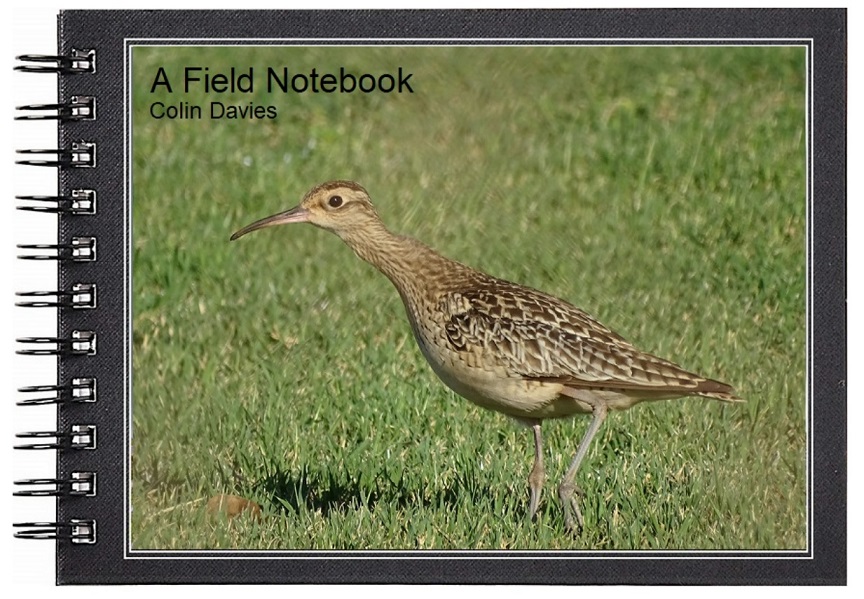
The first wheatears have arrived in the Rainford area, with two males on Clare's Moss from the Old Coach Road on 23rd March and another two at Moss Lane today. Also today a white wagtail at Moss Lane.
Thursday, 27 March 2025
Wednesday, 26 March 2025
Tuesday, 25 March 2025
Avocet and kittiwake, Pennington Flash
Once again a gloriously dismal, drizzly day produced the goods at Pennington
Flash, with the highlights being an avocet and an adult kittiwake. The
avocet started off on the spit and then moved onto Ramsdales scrapes.
Other birds today included my first willow warbler of the year at the Slag
lane end, 100 sand martins and two black-tailed godwits.
Monday, 24 March 2025
Caspian gull with "thayeri" pattern primaries, Cutacre
I called in at Cutacre CP this afternoon hoping to see the pair of garganey
that had been reported earlier on Swan Lake. I could only see the drake, but
while I waited I managed to find a cracking adult or 5CY Caspian gull. A real stunner!
The primary pattern of this bird is unusual for Caspian gull....
...the white tongue on P10 joins the white tip on the inner web, reminiscent of Thayer's gull. I didn't notice this myself until it was pointed out to me by somebody looking at the photos, but apparently about 5% of Caspian gulls have this "thayeri" pattern. More usually the tongue does not touch the white tip and the area of black between the two is much larger.
There's a couple of interesting articles here by Chris Gibbins and here by Ian McKerchar which discuss this "thayeri" pattern (both open in a new window).
Sunday, 23 March 2025
Green-winged teal, Chat Moss
It's always nice to see a green-winged teal, so I wasn't going to miss out on an opportunity to see one locally on Chat Moss. Viewing was difficult but in the end I managed to find it and it showed pretty well.
Friday, 21 March 2025
Red kite and the first sand martins, Martin Mere
A red kite at Martin Mere today was only my second ever site record in 50
years of visiting the place. Also today, my first sand martins of the year with
six over the mere, four adult Mediterranean gulls, at least 45 avocets plus
the usuals.
Mediterranean gull.
Wednesday, 19 March 2025
Black scoter, Hoylake
|
| Photo: Putative hybrid black x common scoter. |
This morning I was up early and walking across Hoylake beach at 6:30am. It
was a glorious morning, with blue skies and wide open views across Liverpool
Bay, but more importantly it was approaching low tide and this was virtually
the only part of the day where I had any hope of seeing North Wirral's black
scoter.
This North American sea duck has been offshore here for about a week,
associating with a few hundred common scoters and two hours either side of
low tide is the only safe time to see it. It's a vast beach and I was
walking out to the tideline which was over a mile (1.5km) offshore. You need
to be sure of your tide times out here, because there are channels behind
you which fill as the tide comes in and if you're not careful can leave you
on a rapidly diminishing island of sand. Following the tide out is the
safest way to do it but you still need to be extremely careful and aware of
the state of the tide.
Eventually I reached the tideline and found many small groups of common
scoter spread all over the sea, stretching away into the distance towards
the wind farm. Some were just shimmering dots and identification of these
birds was just impossible, even with a telescope. Fortunately though, an
apparent trait of black scoter is the habit of staying close inshore so I
was hopeful that it would be one of the closer birds, and so it proved, but
not without much head scratching and mis-identifications!
|
| Photo: Common scoter. |
The first problem was that there were common scoter out there with far more
yellow on the bill than I expected. So for example, compare the
second and third birds from the right in the photo above, not only the bill patterns
but also the head and bill shape. These birds were amongst the closest I saw
all morning, but even so, they never stopped either bobbing up and down,
diving or chasing each other, allowing just split second views and in these
circumstances it would be easy to think that the second right bird must be
the black scoter. I spent a lot of time videoing and photographing this
flock before I realised my mistake.
Fortunately I spotted Sean, the original finder of the black scoter about
500m to the west of me and he seemed to be watching something so I headed
over. It was indeed the black scoter that he had been watching for half an hour. It was alone and
at close range but initially asleep when I arrived, however after 10 minutes or so it woke
up. It had a large swollen blob of yellow on the bill and was very different
to the earlier bird that I had tried to turn into black scoter. I was very
happy with the identification.
We watched it for another 10 minutes or so until finally it took off and
flew east, more or less to where I had been standing earlier. I wish I'd
left it there to be honest but I decided to walk back and try for another
look and possibly get some photos.
Tuesday, 18 March 2025
Wednesday, 5 March 2025
Lesser white-fronted goose, Upper Thurnham
It's been a poor winter for geese in north west England in my opinion, with
below average numbers of unusual species in amongst the flocks of pink-footed
geese. However, in recent days pink-foot numbers have built up on the Fylde as
birds from Norfolk begin to return to the area before heading north in the
next week or so, and with them has come a wonderful adult lesser white-fronted
goose.
This is one of my favourite species of any bird, not just geese. They are the
reason why Peter Scott set up the Wildfowl Trust (now Wildfowl and Wetlands
Trust) following a visit to Slimbridge in 1945. He was using a war time pill
box as a hide overlooking an area of marsh known as the Dumbles when he found
two lesser white-fronted geese with a flock of 2000 Russian white-fronts. He
decided almost there and then that this was the place for him to live and to
be the headquarters of a new conservation organisation that he had been
planning to setup. I recommend his book "The Eye of the
Wind" which gives a very evocative description of this period.
Having read this book in my youth, I always wanted to see lesser white-fronts
at Slimbridge, but sadly even though I visited a few times in the early 1980s
when the species was still almost annual, I failed to see any. I've always
considered Slimbridge the classic place to see the species and Russian
white-fronts the classic carrier species.
It took until 1991 for me to see my first lesser white-front, with pink-footed
geese at Martin Mere, but by that time we were already calling them "of
unknown origin".
The species has undergone steep declines in recent decades largely due to
hunting in their eastern European and Asian wintering grounds. In an effort to
save the species, conservationists in Sweden set up a release scheme which
aims to change the migration pattern of the species by directing them towards
Western Europe in winter rather than the east.
This is theoretically possible because unlike passerines, geese and swans
learn to migrate from their parents by travelling to their wintering grounds
in family flocks and the hope was that the Swedish birds would learn to travel
west every autumn.
I've haven't really followed the progress of this release scheme and don't
know much about it or how successful it's been, but the theory sounds good.
However, what it has left us with is three possibilities when it comes to the
origin of this lesser white-front at Upper Thurnham.
Swedish birds tend to overwinter in the Netherlands but this winter there have
been higher numbers than usual wintering in the UK, including seven ringed
birds at Flamborough Head and at least nine in Norfolk. Officially these birds
are not "tickable", probably because they're not yet considered to be a self
sustaining population. Today's bird could be from this population.
Ferruginous duck, Woolston Eyes
Aythya diving ducks are very much underrated in my opinion, they're all really nice birds, with the drake ring-necked duck currently touring St Helens a perfect case in point. So is this drake Ferruginous duck which turned up on the Oxbow by the bridge to number 3 bed at Woolston Eyes today. It's assumed to be the same bird which was present last spring when it was accompanied by a female. My first ever Ferruginous duck was at Woolston Eyes in November 1984.
Subscribe to:
Posts (Atom)
Popular Posts
-
On Saturday I reported seeing a ringed Mediterranean gull at Pennington Flash. By taking a few photos of the ring from d...
-
There's been a drake bufflehead frequenting the North Wales coast since the beginning of December and finally today I managed...
-
Martin Mere is far and away the best nature reserve in North West England and probably in the top 5 in the country. It's jus...