Saturday, 16 June 2018

1770 to Noosa


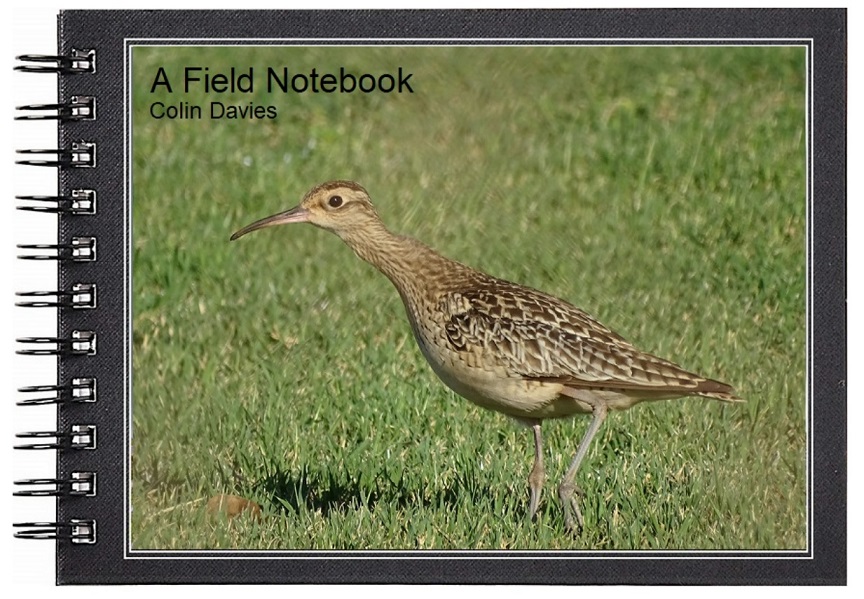
Today I traveled from 1770 to Noosa. It's a 370km drive and it would have been easy for me to pick out a few scenically beautiful places to stop on the way, but instead I decided to stop off at places which might provide me with birds which I might not otherwise have seen on the holiday. For example, a stop in an area of farmland turned up this Australian pipit. It's a very common bird in Australia, but only if you go to the right habitat, no point in looking for this in tropical rain forest.

At another stop I managed seven species of raptor in 15 minutes, including bird of the day two swamp harriers which unfortunately I was unable to photograph.  Other new species for the holiday were azure kingfisher and white-headed pigeon.

Thursday, 14 June 2018

More Tawny frogmouth


With the exception perhaps of the beach stone curlew on Fraser Island, it's hard to imagine a more enigmatic bird than tawny frogmouth, and this bird on my campsite at 1770 shows exceptionally well. What a great bird!


A mob of whiptail wallabies


I was delighted to stumble across a mob of whiptail wallabies this morning on a walk along the coast from 1770. Compared to most other kangeroos and wallabies, they were very approachable and consisted of a male with several females and juveniles. As you can see in the photos below, one of the females has a large joey in her pouch, though the animal itself is not visible.

Tuesday, 12 June 2018

Frogmouth and thick-knees on the 1770 campsite


I've moved onto the town of 1770 in Queensland, staying in a cabin right in the middle of a eucalyptus woodland, offering lots of nocturnal possibilities! I've heard that there are possums, sugar gliders and echidnas on the site, but tonight I had to be content with a tawny frogmouth. The frogmouths belong to the same family as the nightjars and like their cousins they are always extra special birds to find, not least because of their nocturnal habits.  On my last visit to Australia in 2015 I was shown a Papuan frogmouth sitting on a nest, and those are even larger than tawny, but this bird was impressive enough, at least twice the size of a nightjar I would guess. A stunning bird.

Monday, 11 June 2018

Nankeen night-herons and the ubiquitous swamphens


Nankeen night-herons are always nice to see, especially when they show as well as this. Like all night herons they are most active and dusk or at night, so this is a really special sighting.

Sunday, 10 June 2018

A day in the eucalyptus forest


Pacific baza, a major target species for me on this trip to Australia. Now I really do feel like I'm in the tropics! This species feeds often in small groups on insects, nestlings and even frogs high up in the canopy.  There were two birds in this tree.

Saturday, 9 June 2018

Parrots and Pelicans at Burrum Heads


If you like parrots Australia is the place to be! There's loads of them. Today I had some nice views of some really special birds. First off this is a galah, a fairly common bird  but it's not often I see them this well.

Friday, 8 June 2018

The March of the Sand Bubblers


Yesterday I mentioned the sand bubblers, small blue crabs which create the aboriginal style patterns in the sand on tropical beaches. Today as the tide came in at Burrum Heads near Hervey Bay, I watched as millions of these crabs made their way across the beach in close rank, almost like columns of ants. A really incredible spectacle. The remarkable thing was, if I approached too close the crabs just disappeared! Inside a couple of seconds they just sank themselves into the sand and it was as if they had never been there, just a flat sandy beach remained! I don't know where these crabs were going or what they were doing, were they retreating from the tide or does this mass movement signify something else? I don't know, but great to be there and witness it.


Thursday, 7 June 2018

Fraser Island


Someone once said that real birds eat fish, and that's something I can really relate to. Fish eating birds are generally something special. However in Australia I'd have too beg to differ and say that real birds eat crabs!

I was walking along the beach on Fraser Island today when this stonking beach thick-knee walked out from the vegetation calling. This is a species which in my experience is quite timid and will not allow close approach, however this bird walked towards me and was obviously quite agitated.  I assume that it must have had a nest or chicks nearby, but I didn't dwell too long in the area. Like all beach birds, beach thick-knee is under threat due to its preference for nice sandy beaches which unfortunately also attract people.

Tuesday, 5 June 2018

Along the Brisbane River

A day spent along the Brisbane river, from Teneriffe in the east to Fig Tree Pocket in the west. I started off having a sail along the river on the Brisbane CityCat, much too fast moving for any serious birding but a quick, cheap and easy way for me to see the city without spending all day at it. Even so I added a few species to my trip list so far, Australian darter, gull-billed tern, lesser crested tern and white-face heron.

On returning to the city centre I caught the bus to Fig Tree Pocket and the Lone pine koala sanctuary.  I'm not really one for spending a lot of time in zoos, captive animals don't do a lot for me, but in this case it seemed worth a visit. Quite apart from the fact that the grounds and gardens attract many wild species, I don't think that it's possible to see some of these Australian specialities even in zoos outside of Australia. For example I don't know how many platypus there are in zoos across the world, but I bet it's not many, if any. The aussies seem as keen to keep Australian things in the country as they are to keep foreign things out. Pity they didn't think of that 250 years ago.....


A walk along Breakfast Creek

Day one of my latest Australian adventure saw me start off at Banks Street Reserve in Brisbane, about three kilometers north of my accommodation at Redhills. This is a small area of remnant rainforest and it holds some interesting species. From here I then followed Breakfast Creek for a few miles, before dropping down into the city for a visit to the Gabba followed by a quick schooner of ale.


When they were giving out names, the name glossy ibis had already been allocated to the "European" (actually cosmopolitan) ibis, so what to call this bird? Straw-necked ibis hardly seems to do it justice.....

Popular Posts